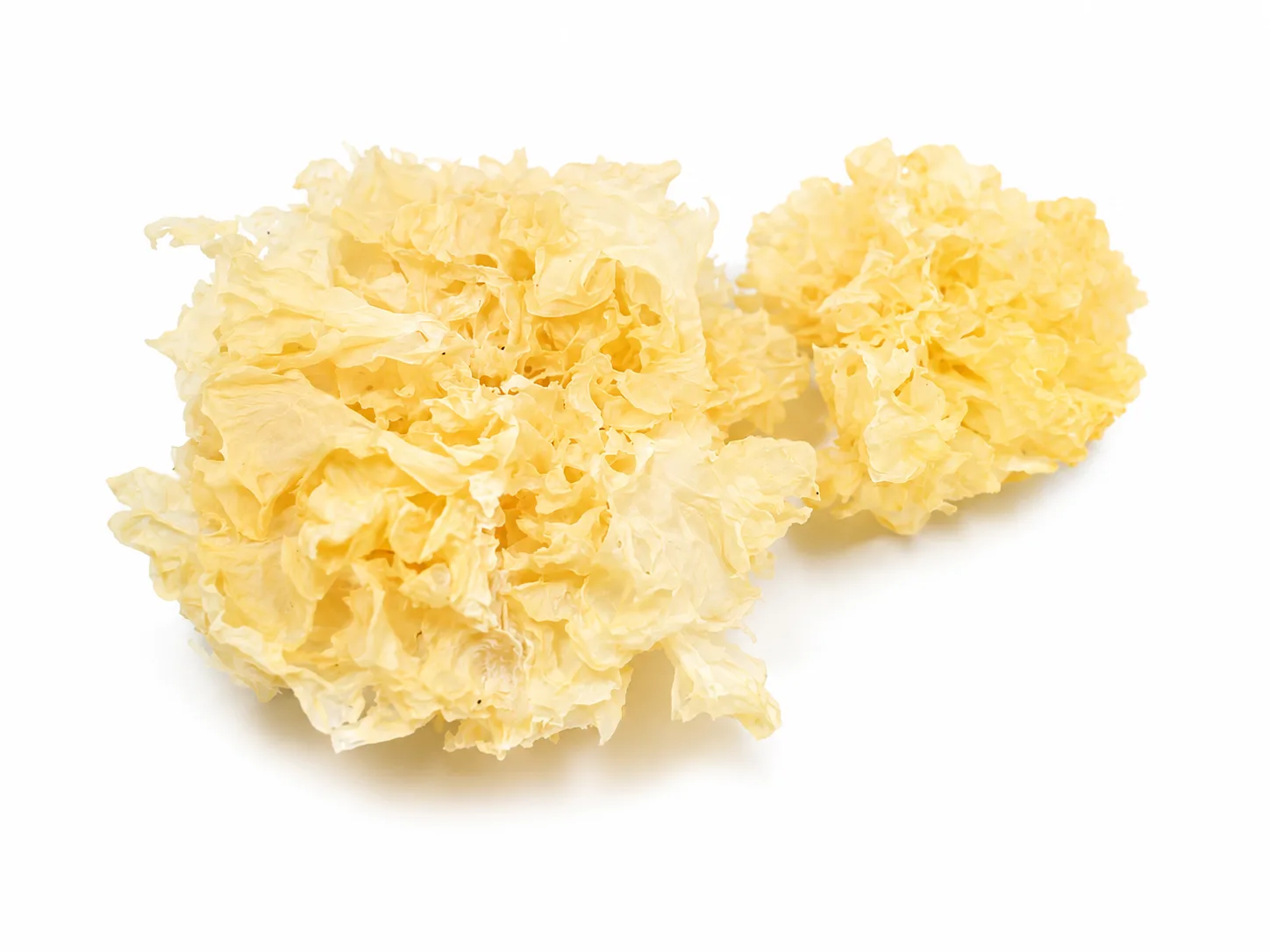
Tremella fuciformis
Snow Fungus Ingredients with Powder, Extract, Freeze-Dried Extract, and Refined Polysaccharide Possibilities
Overview
Snow Fungus is often reduced to a simple hydration or beauty story, but in practice it belongs to a much more specific polysaccharide and processing conversation. Tremella is not just another mushroom described through beta-glucan language, and it should not be flattened into a cosmetic cliché.
For Biosan, Snow Fungus is important because its value sits at the intersection of cultivation biology, polysaccharide structure, viscosity behaviour, and process choice. Conventional powder, extract, and freeze-dried formats already differ from one another, and further refinement is also possible when higher-purity polysaccharide fractions are required.
This page presents Snow Fungus as a technically distinctive ingredient category rather than as a decorative wellness trend.
Available Product Forms
Additional standardised formats and detailed technical versions are available on request.
Note: Full specifications, ratios, and SKU codes are not published online. Use Request Documents for TDS, SDS, and COA samples.
Raw Material Background
Snow Fungus, also known as Tremella or Silver Ear, is not a simple stand-alone mushroom in cultivation terms. It depends on a host fungus and requires a more specialised ecological logic than most common commercial mushrooms. That biological reality is part of the ingredient story and should not be ignored in commercial presentation.
Biosan’s Tremella cultivation background includes host-fungus dependence, humidity sensitivity, and the need for specific regional conditions. This is one reason why Snow Fungus should not be described in the same simplistic way as many other mushroom ingredients.
Processing Pathways
Tremella can be offered as powder, concentrated extract, and freeze-dried extract. Its process logic differs from many other mushrooms because the key polysaccharides are closely linked to viscosity, water interaction, and structural behaviour.
Depending on the project goal, Tremella can also be taken further through refinement and purification routes, including column-based separation, when higher-purity polysaccharide fractions are required. That possibility should be presented as part of its technical range, not as a default public product claim.
Traditional Use
In traditional Chinese practice, Snow Fungus has long been associated with nourishment, fluids, and support for dryness and depletion. It is often discussed in relation to Yin nourishment and moisture balance rather than stimulation or intensity.
Scientific / Research Context
Modern research has focused on Tremella polysaccharides, hydration-related functionality, immunological interest, and broader questions of polysaccharide structure and bioactivity. Tremella belongs to a different technical conversation than mushrooms whose marketing is built mainly around beta-glucan language.
Quality & Documentation
Technical documents for Snow Fungus powder, extract, and freeze-dried extract formats are available on request. Where needed, Biosan can also explain the practical difference between conventional extract forms, freeze-dried formats, and more refined polysaccharide directions.
FAQ
Which Snow Fungus formats does Biosan offer?
Options include powder, concentrated extract and freeze-dried extract. Request the current specification and confirm availability for the format you need.
Is beta-glucan the right primary quality marker for Tremella?
Tremella has a different polysaccharide profile from many commonly evaluated mushrooms. Published structural work describes mannose-rich heteropolysaccharides containing sugars such as xylose and glucuronic acid. A beta-glucan percentage alone therefore gives an incomplete picture. In our experience, a beta-glucan assay may report very low or negative calculated values for some Tremella materials; this should prompt a method-suitability review rather than an automatic conclusion that the material is poor quality. We favour an appropriate polysaccharide specification supported by identity and composition testing. [S25]
Are Tremella polysaccharides the same as hyaluronic acid?
No. These are chemically different materials. We prefer to explain Tremella through its own composition and measured application properties rather than describe it as an equivalent replacement for hyaluronic acid. Any claim about skin benefits needs evidence relevant to the actual ingredient, dose and route of use; a shared hydration-related description does not establish the same biological effect. [S25]
Does a Tremella cell study prove a human skin benefit?
No. Laboratory results and oral or topical human outcomes require separate evidence. [S25]
How should Tremella be evaluated for a beverage?
Test the ingredient in the intended formula at the actual use level. Examine dispersion, hydration time, viscosity, sediment, flavour and stability under the proposed mixing and storage conditions. A polysaccharide percentage or drying description cannot predict all of these properties. We recommend evaluating a batch-identified sample and agreeing the required application performance alongside the analytical specification.
Related Resources
Need Specifications, Documents, or Product Guidance?
If you are evaluating mushroom ingredient options for your market, product line, or formulation work, our team can help you review available formats and provide the relevant technical documents on request.