Overview
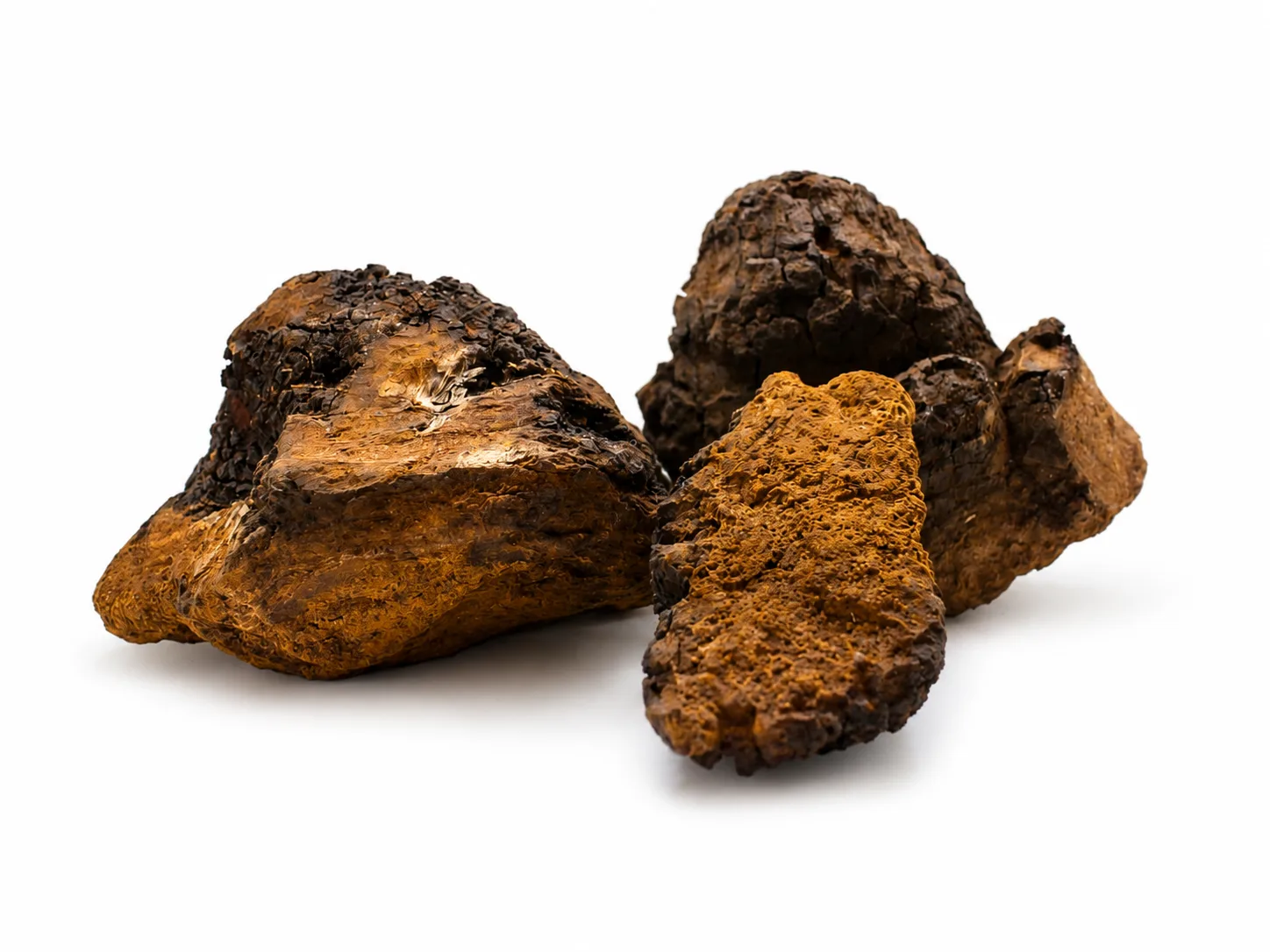
Chaga is often presented as a mystical wild forest material, but the real question is not romance. It is maturity, harvest discipline, and whether the raw material is treated as a slow-growing natural resource or simply as a wild commodity.
Unlike cultivated mushrooms, Chaga cannot currently be farmed in the same commercial way, and a mature sclerotium may take many years to develop. For Biosan, that changes the raw material logic completely. The company does not treat Chaga as a material to be harvested as early and as small as possible. It pays attention to maturity and avoids collecting undersized Chaga because resource continuity is part of ingredient quality.
This page therefore presents Chaga as a distinct wild-harvest ingredient category with real ecological limits, sourcing discipline, and extraction choices.
Available Product Forms
Additional standardised formats and detailed technical versions are available on request.
Note: Full specifications, ratios, and SKU codes are not published online. Use Request Documents for TDS, SDS, and COA samples.
Raw Material Background
Chaga grows on birch and is tied directly to wild-harvest reality. That means sourcing discipline matters far more than it does with a cultivated mushroom. Maturity, harvest timing, geographic source, and the condition of the birch host all shape the eventual ingredient.
Biosan treats Chaga as a slow-growing natural resource rather than as a simple wild commodity. Because a mature Chaga sclerotium may take many years to form, the company avoids collecting undersized material and places importance on maturity as part of both product quality and species continuity.
Processing Pathways
Chaga can be offered in powder, concentrated extract, and dual extract forms. Dual extraction becomes especially relevant when buyers care about a broader profile that includes both water-soluble and alcohol-soluble fractions. The key issue is not one number but how the raw material was harvested and how the extraction route was chosen.
Traditional Use
In traditional northern and Siberian use, Chaga has long been associated with endurance, resilience, and general strengthening. That historical context can be acknowledged without turning the mushroom into exaggerated folklore.
Scientific / Research Context
Modern research around Chaga often refers to beta-glucans, polyphenols, triterpenes, and birch-related compounds such as betulin derivatives. This research interest is real, but how Chaga is harvested and processed strongly affects what kind of ingredient a buyer is actually getting.
Quality & Documentation
Technical documents for Chaga powder, extract, and dual extract formats are available on request. Biosan can also explain how different Chaga formats relate to sourcing discipline and extraction strategy.
FAQ
Which Chaga formats does Biosan offer?
Options include powder, concentrated extract and dual extract. Request the current specification and confirm availability for the format you need.
References
Introduction to Distribution and Ecology of Sterile Conks of Inonotus obliquus. Mycobiology. 2008;36(4):199. DOI 10.4489/MYCO.2008.36.4.199.
Chaga mushroom induced oxalate nephropathy. Clinical Nephrology. PMID 23149251.
What should an authentic Chaga ingredient disclose?
The ingredient should identify Inonotus obliquus and the actual material used. Commercial wild-harvested Chaga generally comes from the characteristic sterile growth on host trees, rather than a conventional cap-and-stem mushroom. Source region, host information where relevant, collection records and the link between incoming material and finished batches support traceability. Cultivated mycelium is a different source material and should be labelled transparently rather than substituted without disclosure.
How should Chaga quality and safety be assessed?
Evaluate the source, composition, processing and intended daily intake together. In addition to identity and routine contaminant testing, consider mineral content, ash and oxalate where relevant to the product and use. Natural variation should be understood and reflected in a justified specification. Neither wild origin nor extraction alone establishes safety or effectiveness. Claims that a process removes an unwanted constituent should be supported by results for that process and ingredient.
Related Resources
Need Specifications, Documents, or Product Guidance?
If you are evaluating mushroom ingredient options for your market, product line, or formulation work, our team can help you review available formats and provide the relevant technical documents on request.